

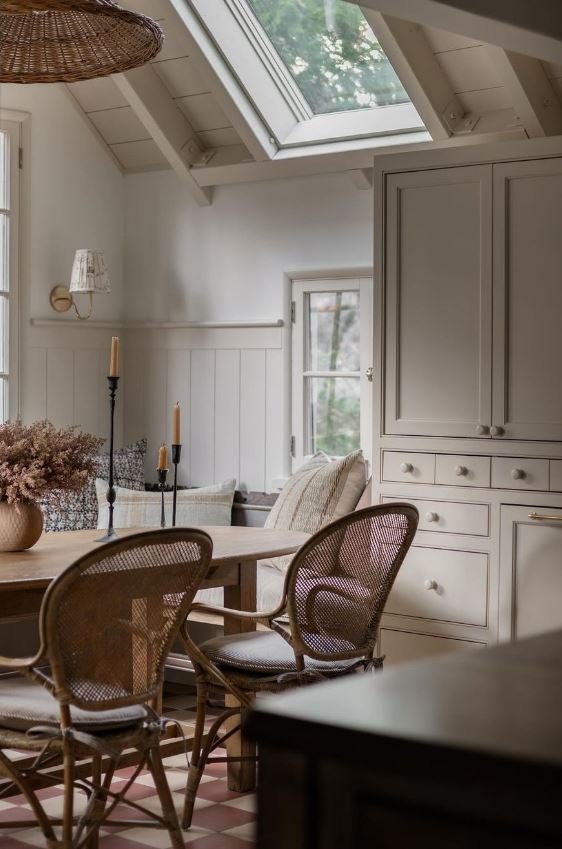
In our house rattan is a hotly debated topic. I love it with a passion, and my husband hates anything “wicker.” I don’t know why. Maybe it’s a weird childhood thing for him, and for me equally so. Growing up in Europe, I spent much of my childhood in my mom’s artist atelier. We called it the mansarde, a name for a rooftop apartment. It was a small bohemian space where she went to paint. I could spend hours there drawing, or rummaging through the old objects that filled the place. I watched the flames in the Kachelofen, a German tiled masonry stove. It felt like another world. I still picture the two large, elegantly woven peacock chairs. They must have been a family heirloom. I loved sitting in them and feeling fancy. Mismatched bentwood chairs surrounded the small dining table, where we had cake and coffee on quiet afternoons.
Rattan furniture carries real emotion for me. It feels like a piece from back home. For many years, though, it just felt old and outdated. But that’s how life goes. Everything comes back around, and all of a sudden you love it again.
Embracing the timeless elegance of rattan in interior design

Rattan furniture and accents are enjoying a big resurgence. People love the natural charm, the versatility and the eco-friendly appeal. It brings a touch of organic warmth into modern living spaces.
Rattan is a type of palm native to southeast Asia. Furniture makers have used it for centuries because it is both durable and flexible. It caught on in the West in the late 19th century. Europeans were looking for materials they could use in place of wood. Rattan seemed ideal. It didn’t need as much processing as wood, and it held up better than cane or bamboo.
The Thonet chair, with its rattan caning, is the classic example. Rattan hit its peak in the mid-20th century, right in the heyday of bohemian and coastal design. Today it is back at center stage. This time it sits in a more contemporary setting, where nostalgia and a modern sensibility work together.
A big reason for the renewed interest is sustainability. More and more people want eco-conscious choices at home. Rattan is renewable and has very little environmental impact, so it fits that thinking. It also grows on fast-growing vines and, unlike synthetic materials, it is biodegradable. That makes it an easy material to feel good about.

A dedication to texture, sustainability, and skill
Beyond the eco-friendly side, rattan is also wonderfully versatile. Think intricately woven chairs, statement lighting, sleek tables and playful little accessories. It adapts to almost any scheme, whether that is Scandinavian minimalism, bohemian chic or coastal elegance. The organic texture and warm undertones add character to a room. Spaces feel more inviting with it in them.

Adding rattan to your home décor can be as subtle or as bold as you like. Personally, I start small. Baskets, mirrors or planters add a layer of texture and natural elegance without much commitment. A piece of rattan or wicker works a lot like a plant in a room. Its organic nature brings balance. If you want to make a statement instead, go bigger with a lounge chair. That one piece gives a whole room a laid-back feel.
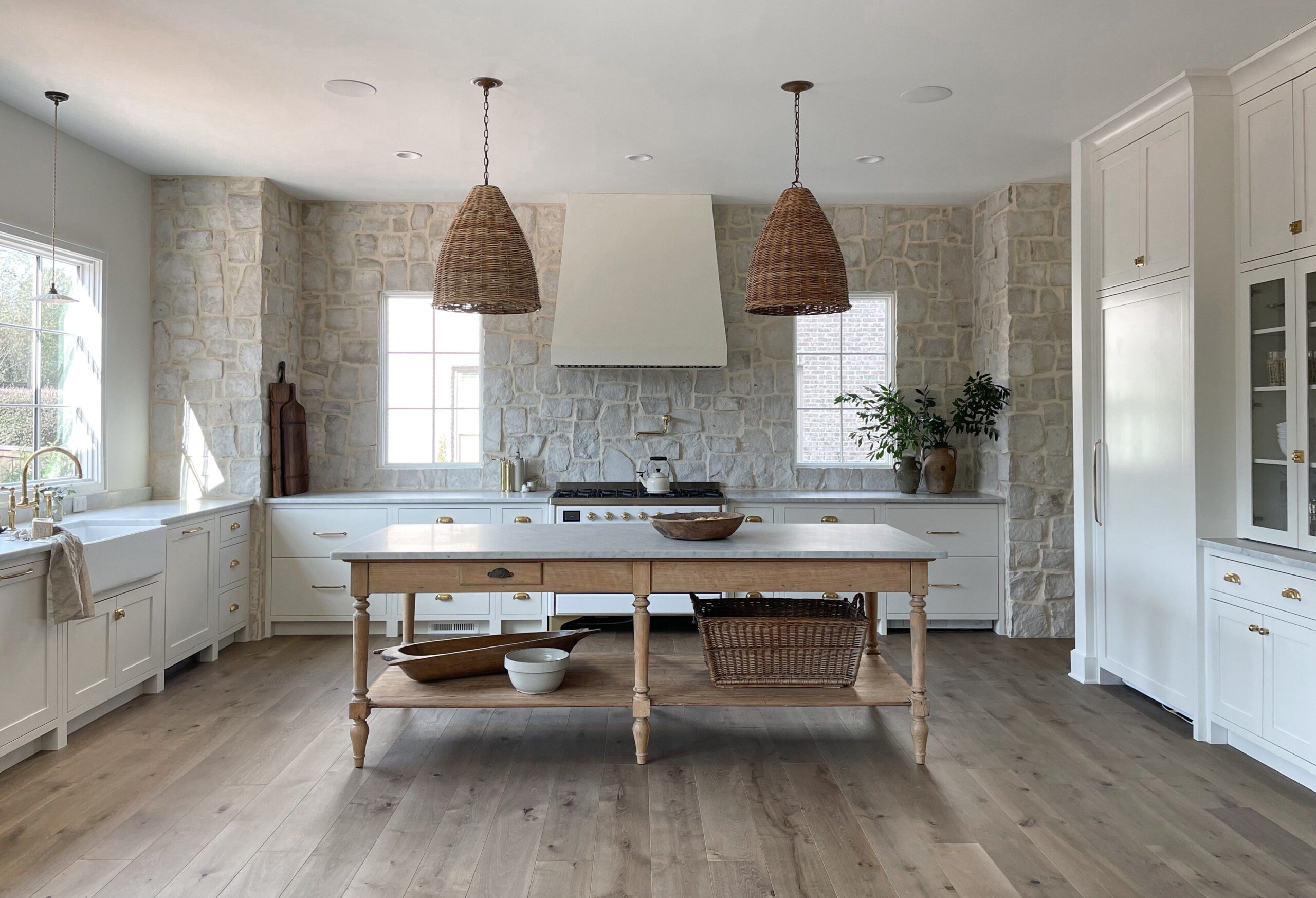
One of my favorite kitchens on the internet, designed by Anna King, shows how woven elements create balance. It is full of warmth and texture. Soft white cabinets, a stone accent wall and a vintage table used as an island. The whole room feels light, cottage-y and cozy. The woven island shades are the perfect accent. They bring in a lighter texture and balance all the harder surfaces. With traditional metal pendants it would look quite different.
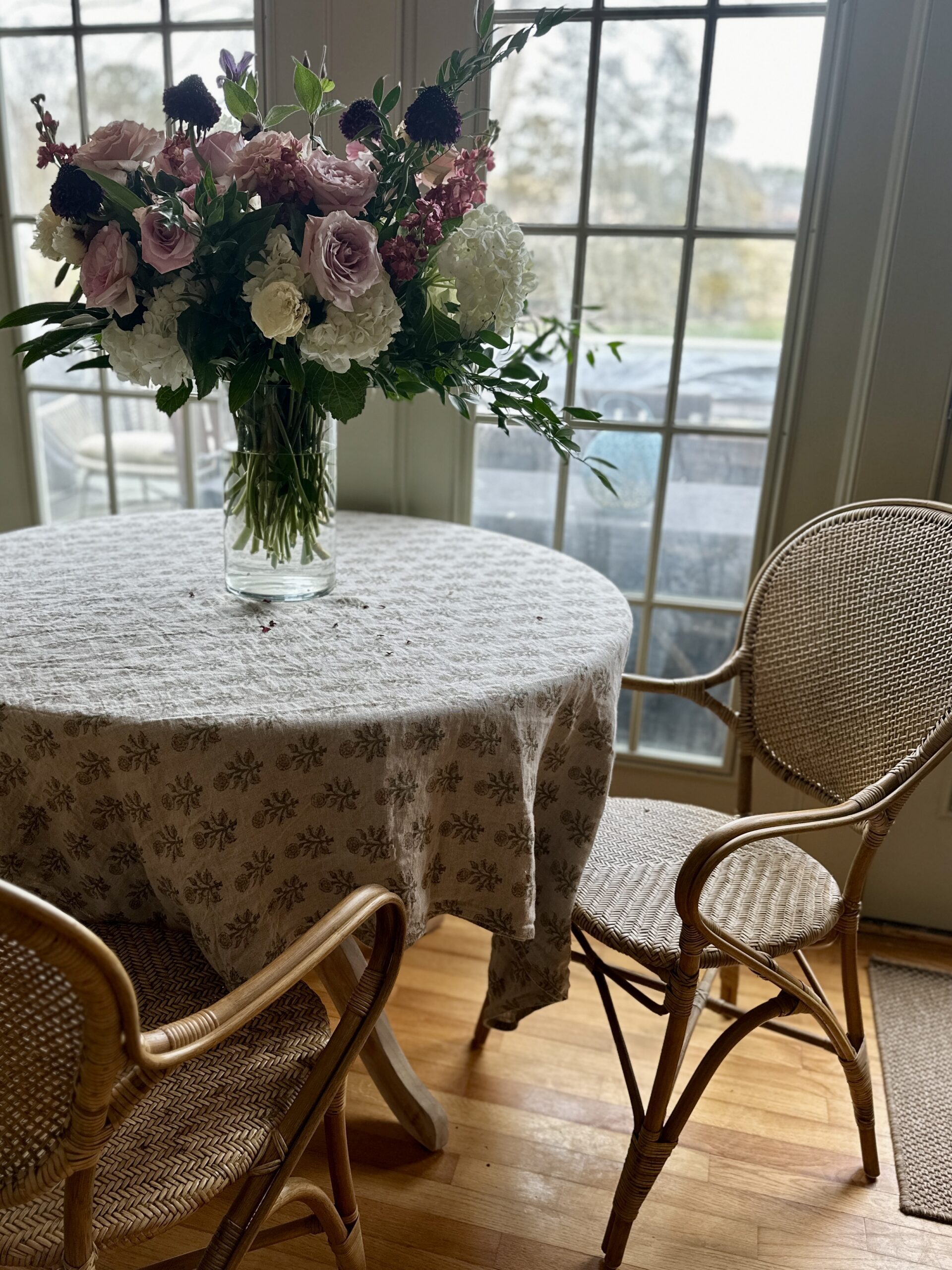
For our breakfast table I wanted a more informal, laid-back look. I hunted for the perfect rattan chair for months and just could not find the one. Then I saw the Amber Interiors Lakehouse reveal. Perfection, as always. I fell in love with the Rossini chair in her dining nook and knew I had found THE ONE. It comes in several finishes. The antique version has an aged look that other chairs on the market are missing. The proportions are what sold me. This shape sits between the grand curves of a peacock chair and the tight silhouette of bistro seating. The handwoven seat and back add a charming layer of texture. In a way, I was re-creating the feel of our old mansarde hideout.
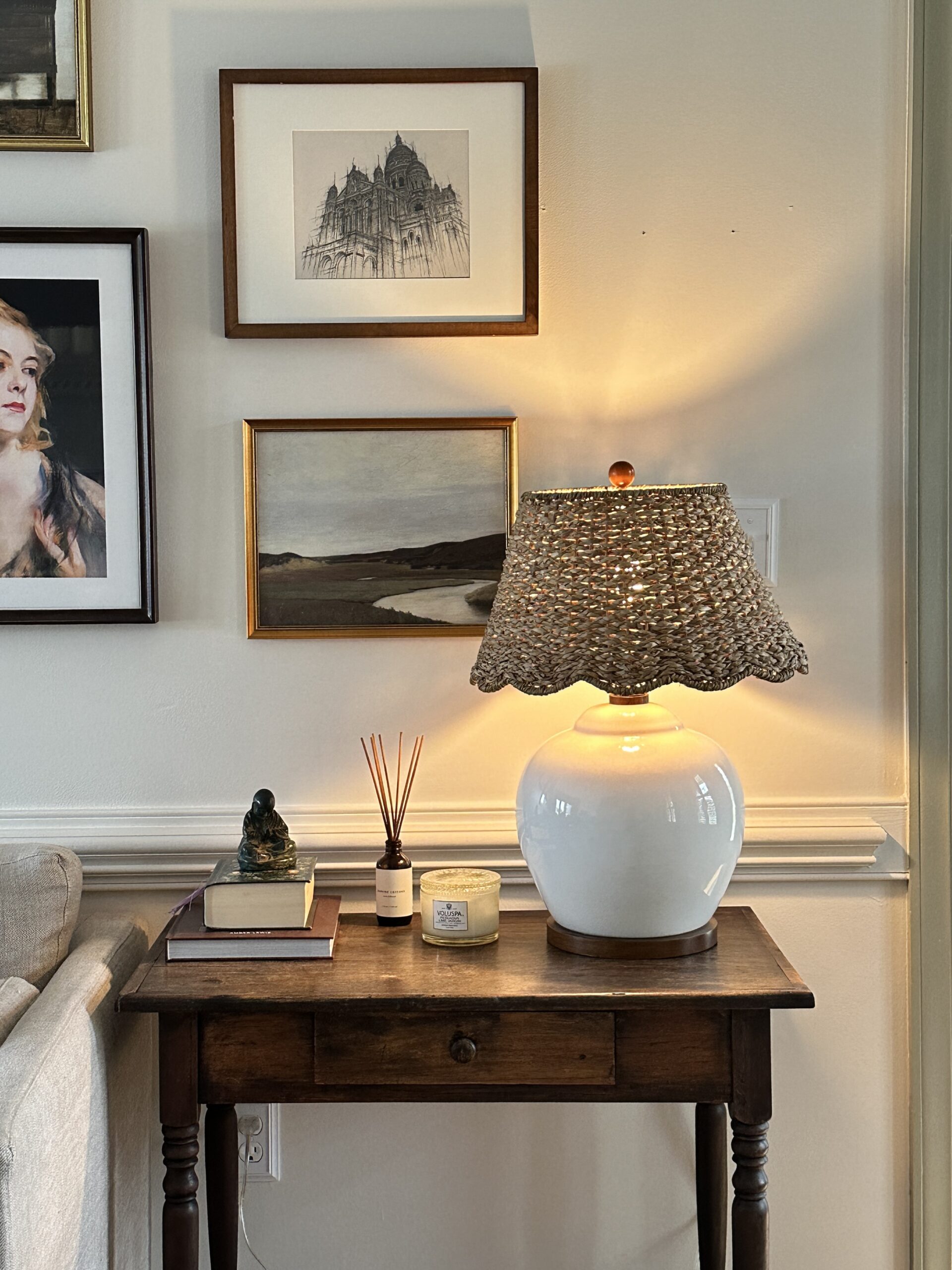
I use woven baskets for storage all over my house. Here is another favorite. I paired an adorable scalloped seagrass shade with a vintage Ralph Lauren lamp base. I scored the base on eBay. Beyond being useful, that shade added another layer of texture to my living room. Harmonious, balanced rooms are good for our mental well-being. I believe that, and I am always looking for ways to create that balance visually.
Biomimicry teaches us something simple. Bring natural elements into our artificially built homes and we feed an innate human need: staying connected with nature. Studies have shown that time in nature lowers stress. Views to the outside, plants, water features, natural materials. All of it helps make a home calmer, and a calmer home is better for our physical and mental health. Especially now, with constant information overload, we need a space where the mind can relax, think and re-charge.
So, yes. Rattan, or any natural woven material, is a great way to bring more balance and texture into your surroundings. Go get a funky piece of rattan, wicker or seagrass. Whatever it is, have fun with it. Here you can find a few of my current favorites. Facebook marketplace and antique stores are also great places to find affordable vintage pieces looking for a new home.